FABRIKA
ERP
ERP system / Food production
Tech stack
- Next.jsApp Router, Server Actions and a standalone build for a self-hosted server.
- SupabasePostgreSQL + Auth + Row Level Security for role-based access.
- Tailwind CSSResponsive admin panel and mobile accounts.
- PWA / Web PushInstallable on phones, offline mode and push notifications for orders.
- Cloudflare R2Storage for product photos and courier photo reports.
- Puppeteer PDFServer-side generation of invoices and reports for printing.
- VPS / NginxSelf-hosted, blue/green deploys via systemd and rate limiting in nginx.
The challenge
The kitchen supplies baked goods and ready meals to 50+ outlets. Accounting ran in a boxed system, orders came in over WhatsApp, and there was no reporting on deliveries at all. The boxed software was built for everyone at once, and bending the kitchen’s workflow around it was painful. The owner needed a tool that fits exactly how this business works.
Result
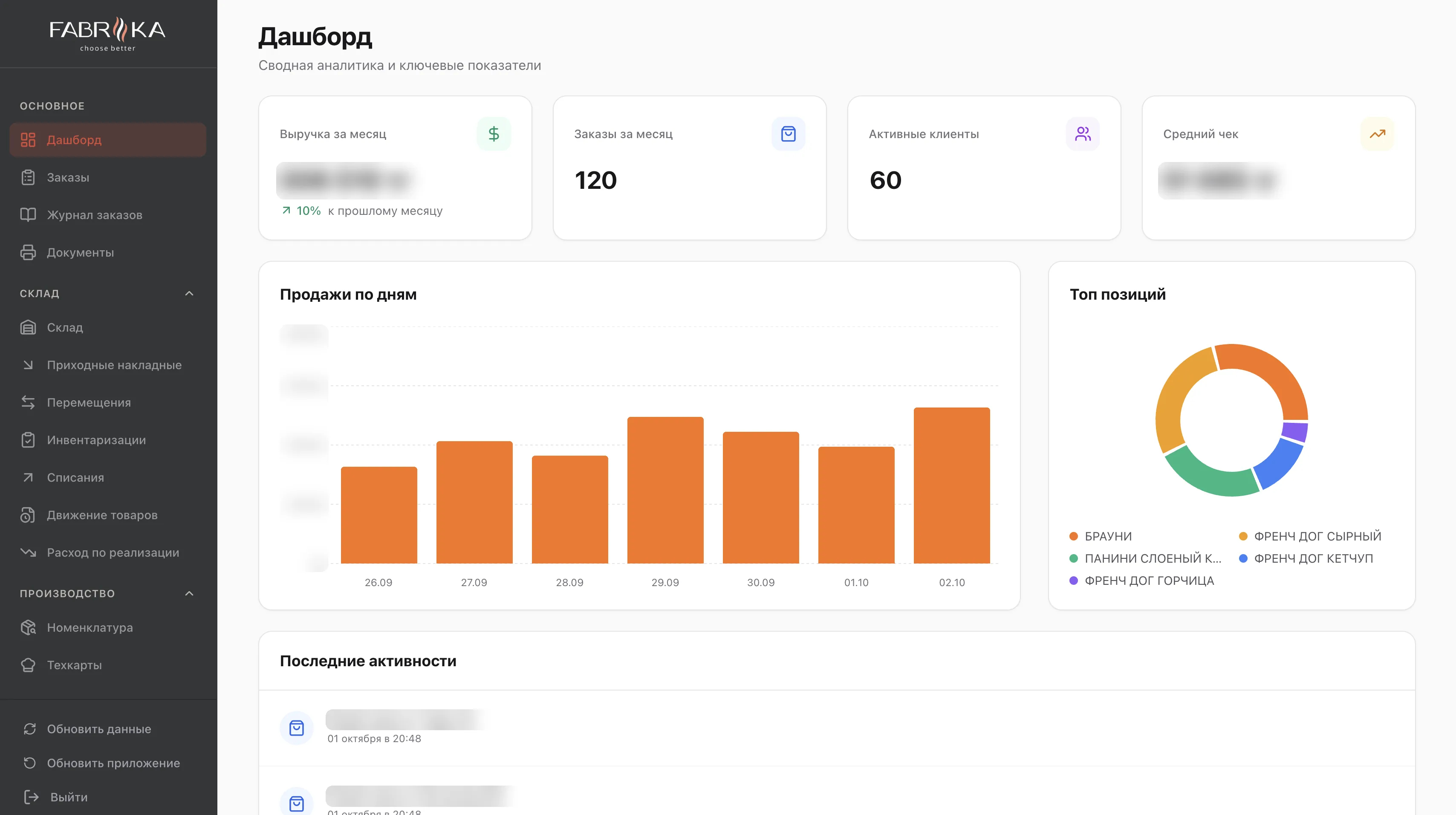
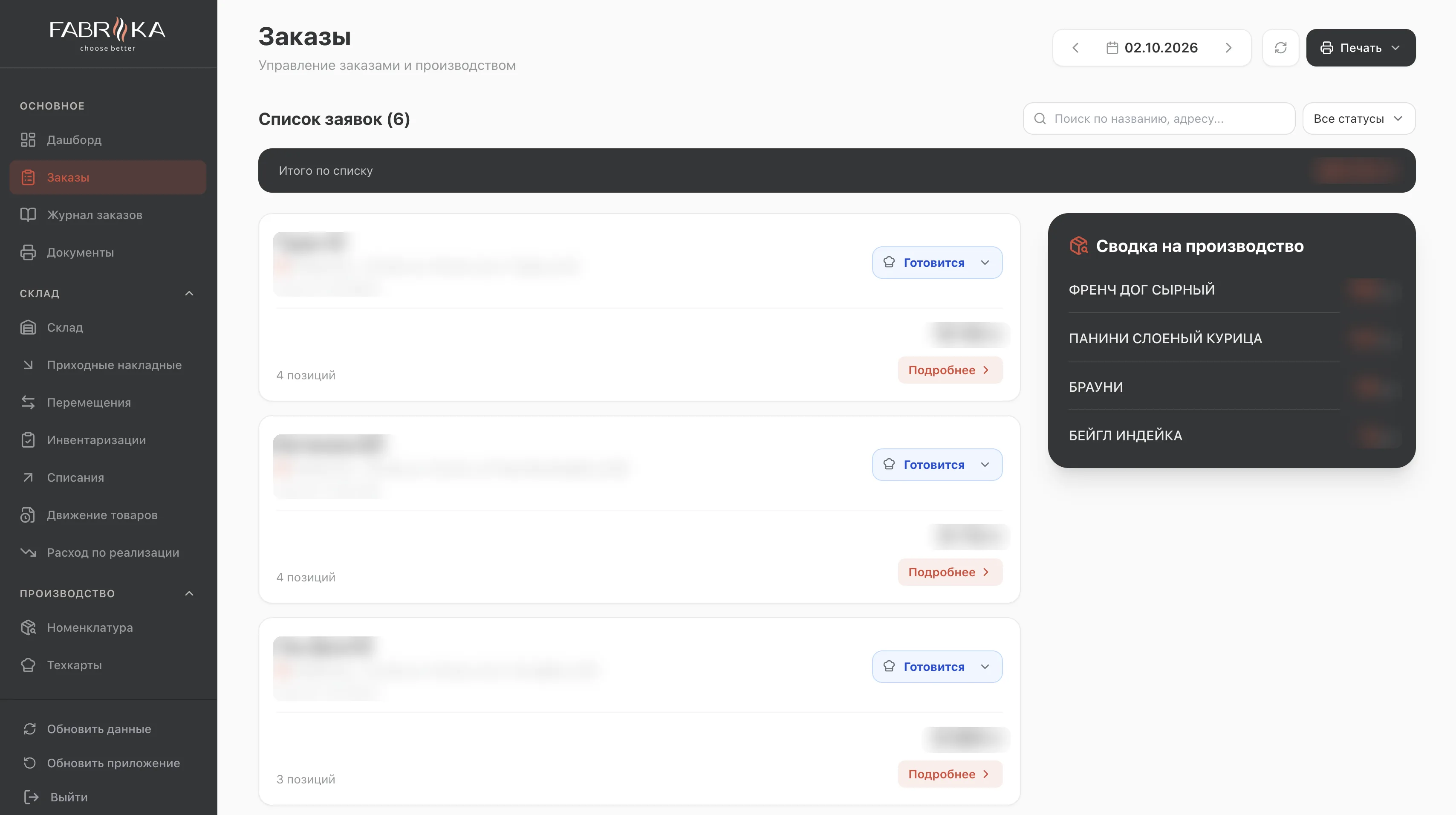
A custom ERP for a bakery and ready-meal kitchen in Astana replaced an off-the-shelf system and order-taking over WhatsApp. The whole cycle, from a coffee shop placing an order to flour leaving the warehouse, now runs in one system: orders turn into a production plan automatically, ingredients are written off by recipe cards, and the owner sees revenue, cost and margin in real time.
What I built
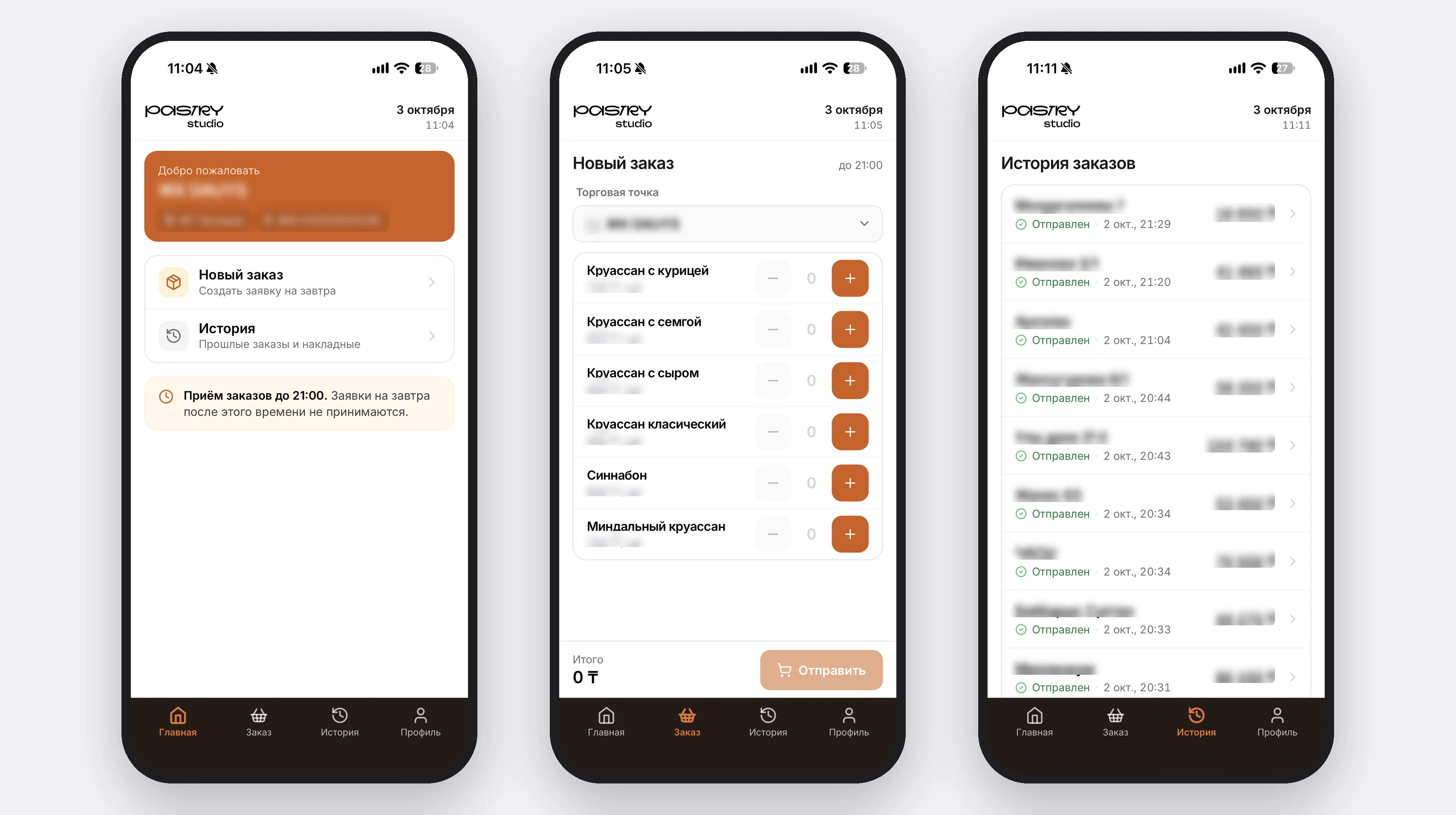
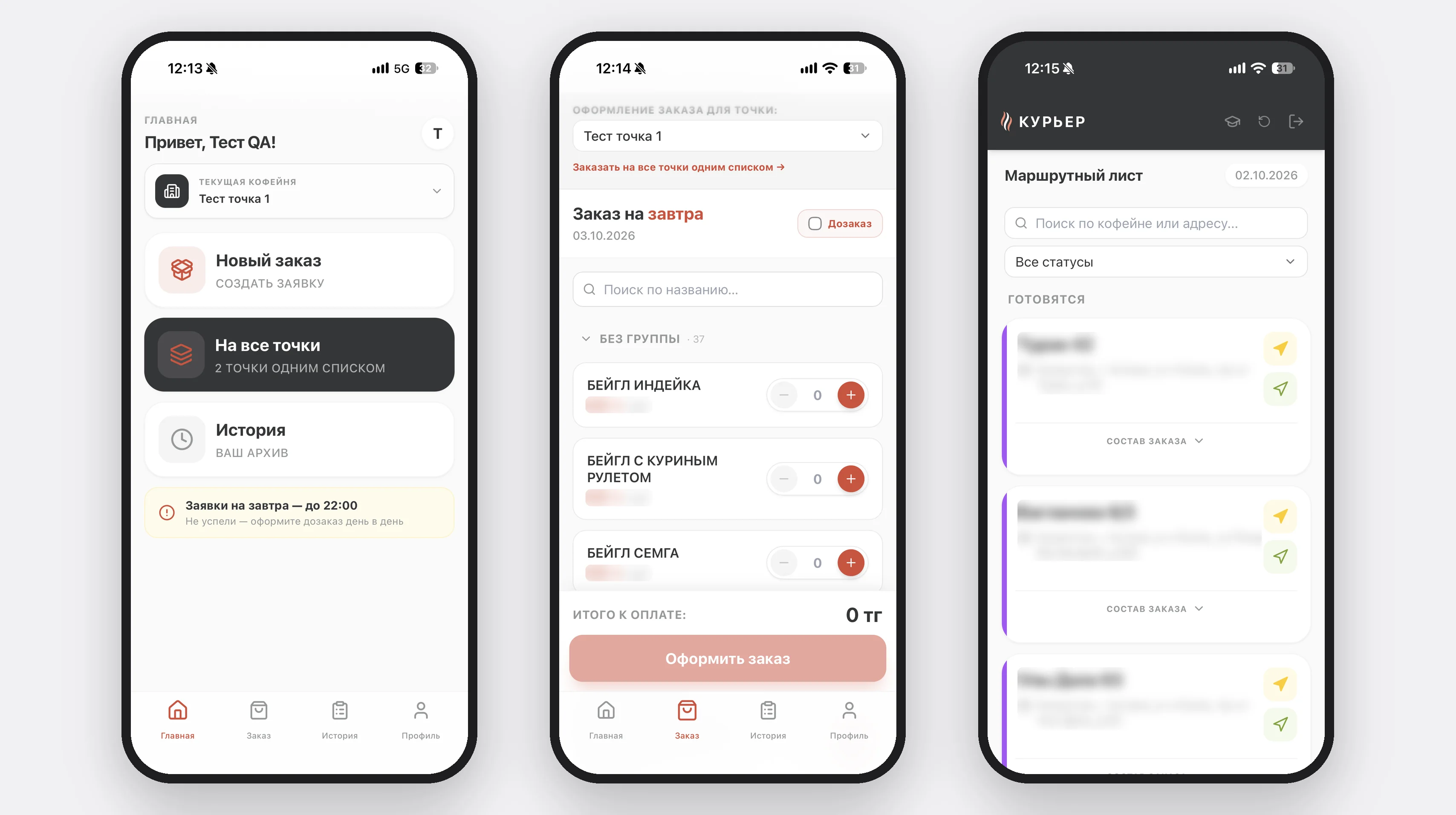
- Role-based PWA: separate interfaces for coffee-shop managers, the kitchen, couriers, the accountant and admins, with flexible permissions.
- Order intake with cut-offs: the main order for tomorrow closes at 22:00, plus urgent same-day top-ups, with server-side time checks in the local timezone.
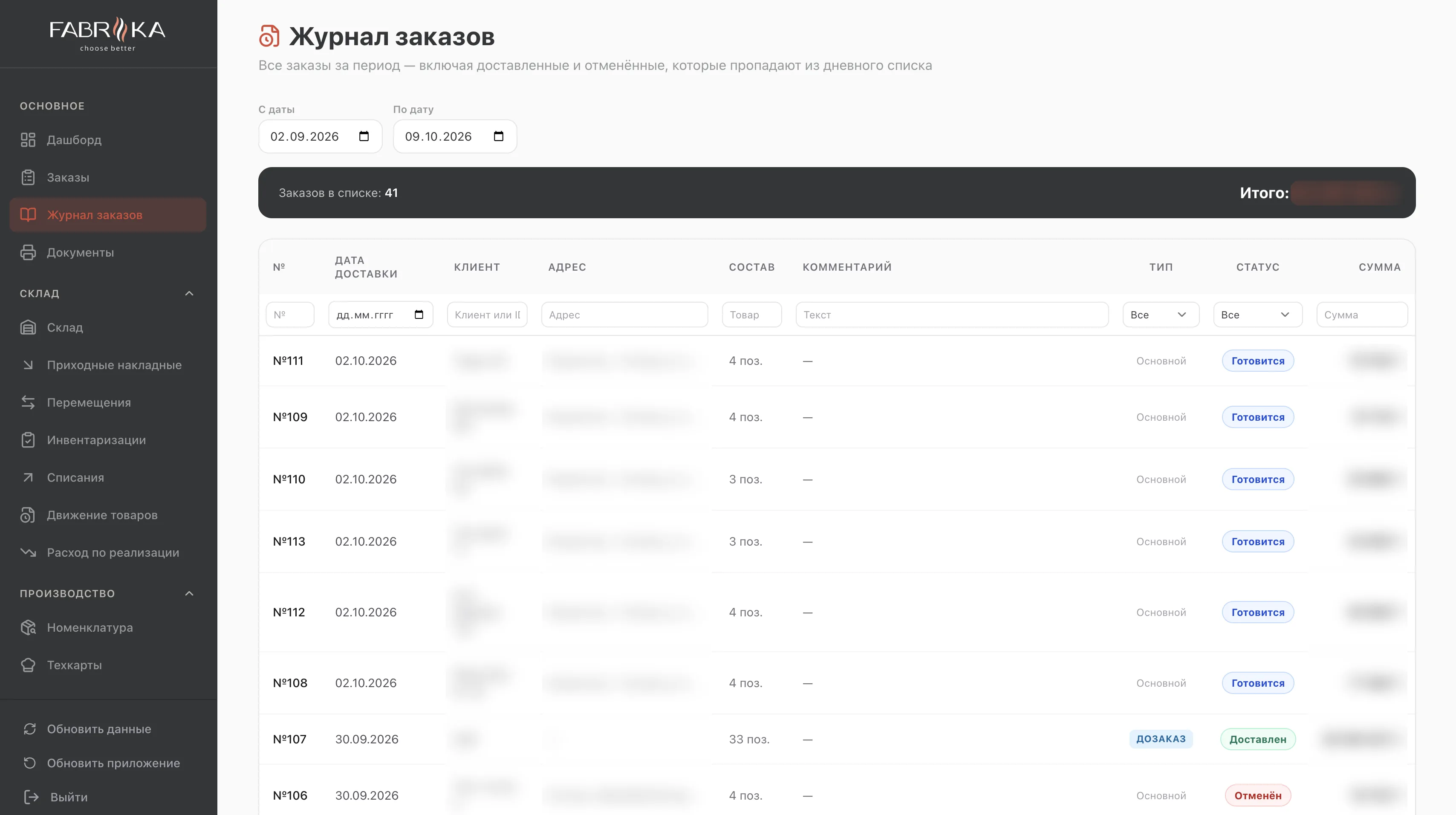
- Production plan: an automatic daily summary of items across all orders for the kitchen, and order tracking from “In preparation” to “Delivered”.
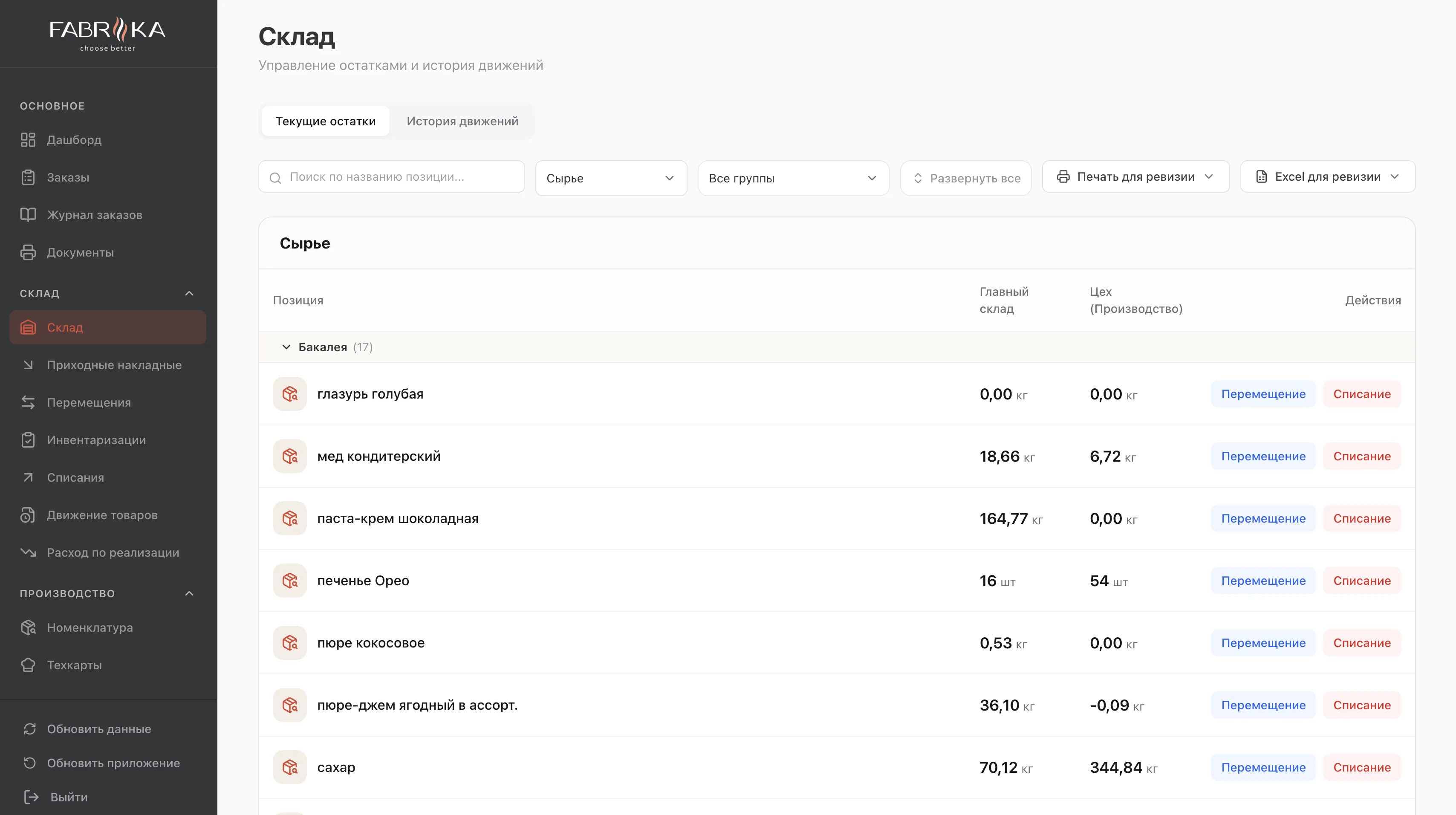
- Inventory: stock across several warehouses, goods receipts, transfers, stock-takes and write-offs, with printing and Excel export for audits.
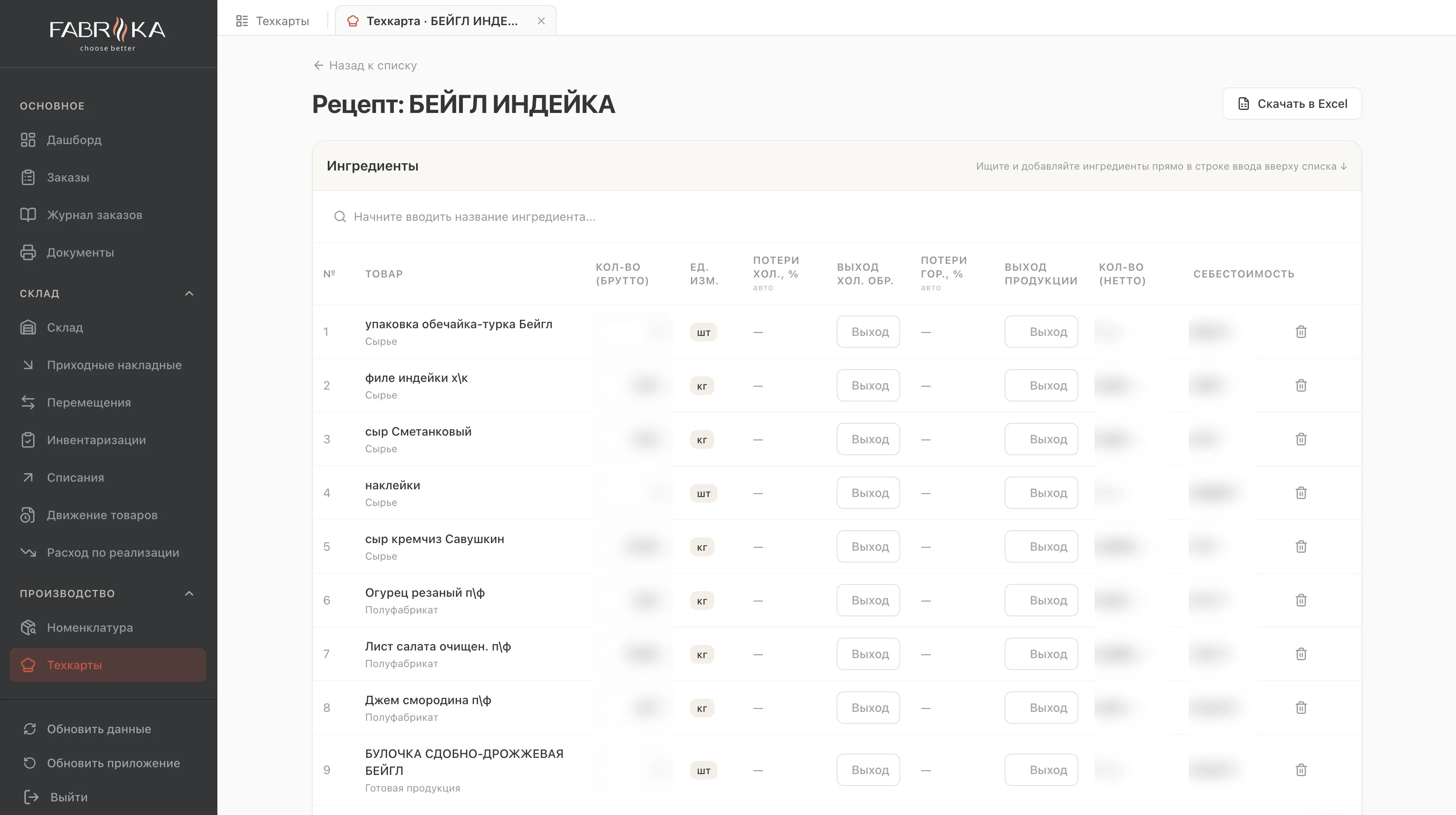
- Recipe cards: the composition of every product and semi-finished item, so raw materials are written off automatically based on actual orders.
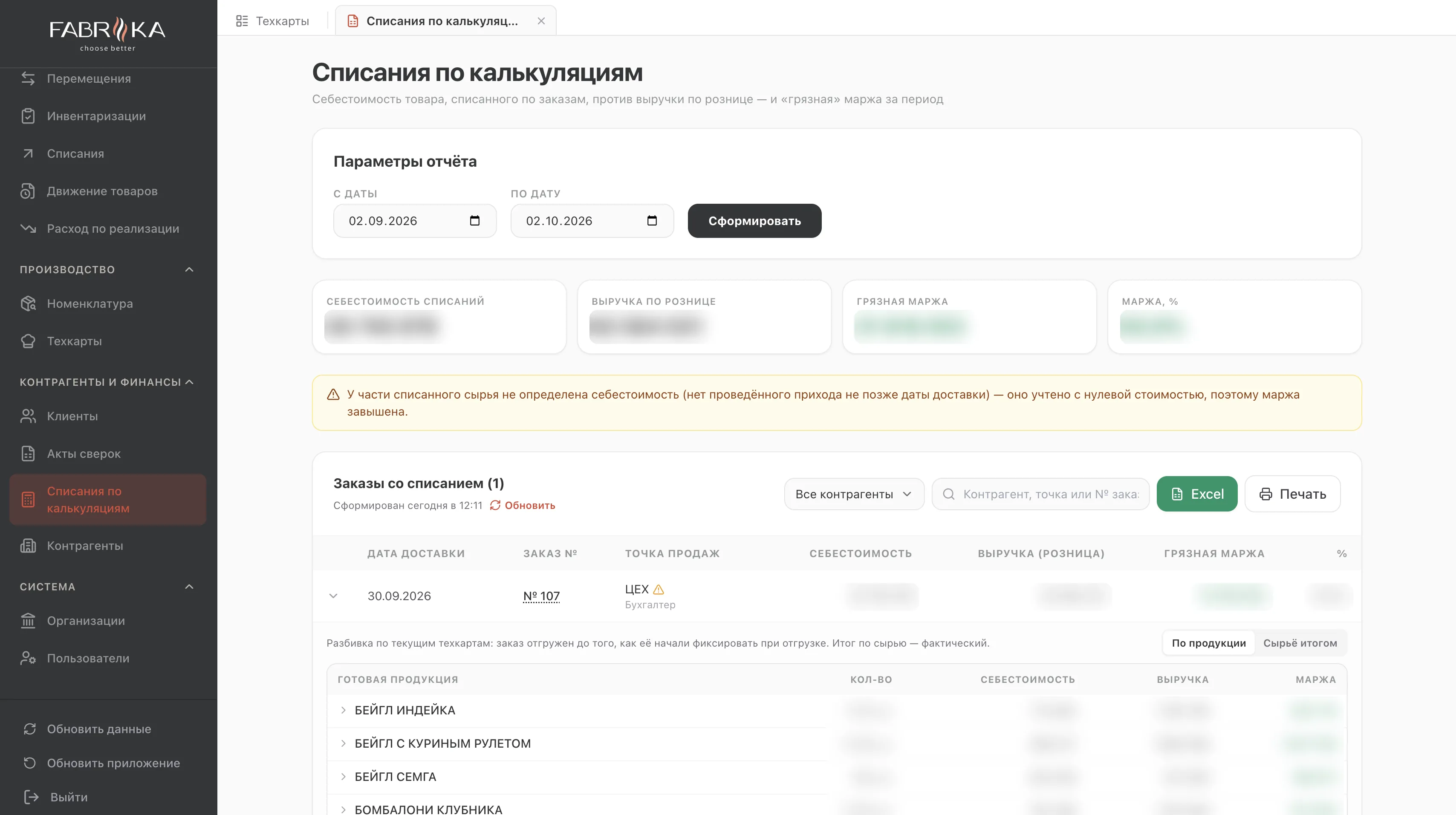
- Financial reporting: reconciliation statements with customers and suppliers, stock movement, and a cost-vs-revenue report with margin.
- Documents: bulk printing of invoices on 58/80 mm receipt printers and A4 summaries via server-side PDF generation.
- Courier module: a daily delivery route and photo proof of handover, with automatic image compression.
- Production infrastructure: own VPS, zero-downtime blue/green deploys, a watchdog, automatic backups and external uptime monitoring.